
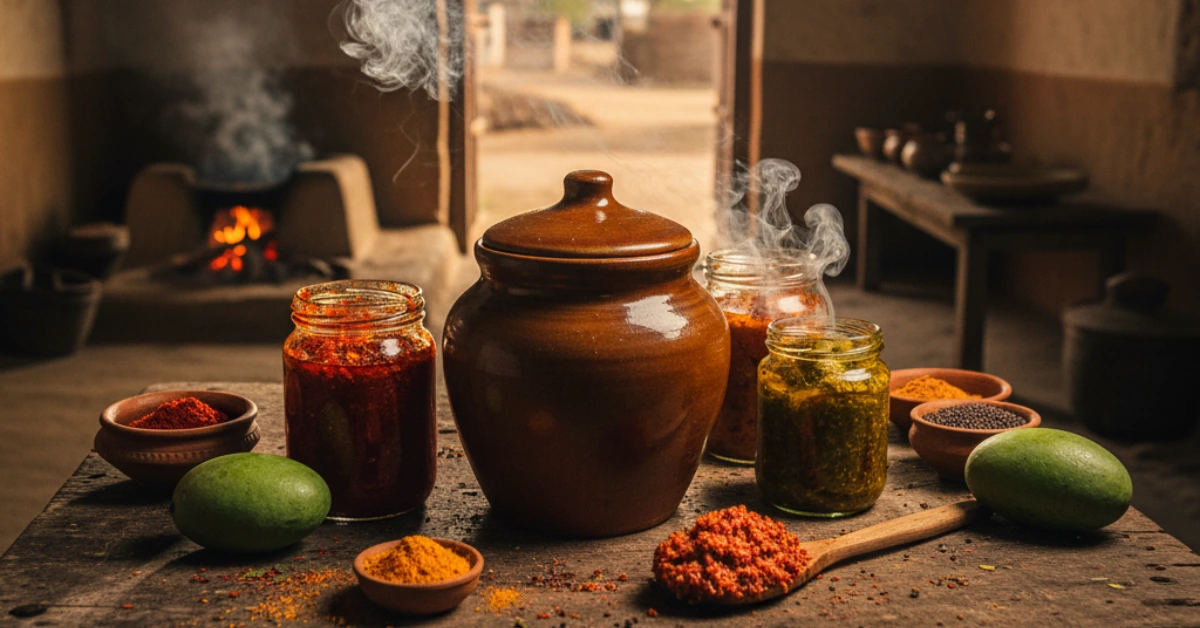
Introduction: Homemade Mango Pickle
If you grew up in an Indian home, you already know how great Aam Ka Achaar (Mango Pickle) is. The smell of spices and the sour flavor of chile that wakes up your taste buds—it’s not just a condiment; it’s a feeling.
There are different kinds of this dish in every part of India, like Punjabi, Gujarati, Andhra, Rajasthani, and Bengali. Each one adds something special to the dish. Mango pickle provides a rush of flavor and nostalgia to any meal, whether you eat it with hot parathas, dal-chawal, or just a plain chapati.
We’re going to prepare a traditional North Indian-style mango pickle that keeps fresh for months and tastes better as it ages. Even if this is your first time making homemade pickle, this step-by-step instruction will help you make real Aam Ka Achaar.
About Aam Ka Achaar, or Homemade Mango Pickle
For hundreds of years, Indian kitchens have had mango pickle. Pickling was a means to keep fruits and vegetables from going bad for a long time, especially before refrigerators were invented.
Mangoes are the most popular fruit in India, so it’s no surprise that they were one of the most popular things to pickle. Unripe mangoes are solid and have a strong taste, which makes them great for soaking up oils and spice combinations.
Different areas utilize different methods:
- In North India, mustard oil, fennel, and nigella seeds give food a strong, spicy flavor.
- South Indian food often has curry leaves and sesame oil in it.
- Gujarat and Rajasthan: Uses additional salt and sometimes sugar to make it sweet and spicy.
Aam Ka Achaar is great because you can make it spicy, mild, dry, or greasy, and once you know the principles, it’s easy to change it to your liking.
🧂 What You Need
To create around 1 kg of mango pickle, you’ll need the following:
🌿 Main Ingredients
- 1 kilogram of raw mangoes (green and firm)
- 250 ml of mustard oil
- 100 grams of salt (or as needed)
Masala, or spice mix,
- 2 tablespoons of fennel seeds (saunf)
- 2 tablespoons of mustard seeds (rai)
- 1 tbsp of fenugreek seeds (methi dana)
- One tablespoon of nigella seeds (kalonji)
- 2 tablespoons of turmeric powder
- Two tablespoons of red chili powder
- 1/2 teaspoon of hing (asafoetida)
If you like a little sweetness, you can add a pinch of sugar or jaggery.
🍋 How to Prepare Step by Step
Let’s break it down into simple, doable steps.
Step 1: Pick the Right Mangoes
Choose mangoes that are firm, unripe, and sour. They shouldn’t be soft or yellowish because ripe ones go bad rapidly. Rajapuri, Totapuri, or local sour mangoes are the best types.
Wash them well, then use a clean cloth to wipe them totally dry. There shouldn’t be any moisture left, since even a few drips can lead to fungus or deterioration later.
Step 2: Cut up the mangoes
Cut the mangoes into small cubes, about 1 inch on each side. If the seed shell is soft, you can include it because it adds texture. Use a dry cloth to get rid of any extra sap or water.
Put the diced mangoes on a clean tray or piece of cotton towel. Let them dry outside for three to four hours in the sun or a fan. This gets rid of moisture on the surface and helps the pickle keep longer.
Step 3: Get the spice mix ready
For 1–2 minutes on low heat, dry roast fennel seeds, mustard seeds, and fenugreek seeds until they smell good. Let them cool down and then crush them coarsely (not into a fine powder).
Put together in a big bowl:
- Mix of ground spices
- Seeds of nigella
- Turmeric
- Powdered red chili
- Asafetida
- Salt
Your spice mix should smell great and look bright.
Step 4: Add spices to the mango
Put the dried mango pieces into the spice mix. Mix everything together well with your hands or a spoon so that every item is well coated.
The pickle will look dry at this point, but that’s fine because the oil will come next.
Step 5: Add mustard oil and heat it up
Put mustard oil in a pan and heat it until it starts to smoke (you’ll see smoke rising). Turn off the heat and let it cool down a little. It should be warm, not hot.
Add this oil to the mango and spices mixture. Use a clean, dry spoon to mix well.
Oil helps:
- Keep the pickle
- Make the taste better
Stop deterioration caused by moisture
Step 6: Optional but Recommended: Sun Dry
Put the pickle in a clean glass jar. Don’t use plastic or metal. Cover it with muslin cloth and leave it in the sun for 3 to 5 days. Every morning, shake the jar lightly to make sure everything is mixed well.
The sun-curing process makes the mango softer and lets it soak up all the spices.
Step 7: Keep it in the right place
After drying in the sun, put the lid on the jar tightly. Put it away in a cold, dry location. If you take care of it, the pickle will be ready to eat in about 10 to 15 days and will stay fresh for months, even up to a year.
🌶️ Tips and Tricks
Only use dry jars and utensils. A one drop of water can ruin the pickle.
Add a spoonful of lemon juice before storing to give it more flavor.
If you want a softer flavor, use less red chili powder and more sugar.
For the South Indian variant, use sesame oil instead of mustard oil and add curry leaves.
For a pungent smell, add more mustard and fennel to the Punjabi version.
You can create a small batch right away without drying it in the sun. Just put it in the fridge and eat it within a week.
Suggestions for serving
You can eat mango pickle with parathas, dal-chawal, curd rice, or khichdi.
Spread it on sandwiches or wraps.
For an additional kick, add to chaats or salads.
💪 Nutrition (Approximate per 1 tbsp serving)
| Nutrient | Value |
|---|---|
| Calories | 40–50 kcal |
| Fat | 4g |
| Carbs | 2g |
| Fiber | 0.5g |
| Sodium | 150–200mg |
Note: High in salt and oil — enjoy in moderation.
FAQs
Q1: Can I use ripe mangoes?
No — ripe mangoes have high moisture and sugar, which spoil easily. Always use firm, raw green mangoes.
Q2: What oil is best for mango pickle?
Traditional North Indian pickles use mustard oil for authentic flavor and long shelf life.
Q3: Why does my pickle turn black?
It could be due to moisture, metal contact, or overexposure to air. Always use dry glass jars and clean spoons.
Q4: How long can I store it?
Up to 1 year if kept airtight and away from moisture.
Q5: My pickle tastes too salty. What can I do?
Add a few more mango pieces or a pinch of jaggery to balance it.
Q6: Can I refrigerate the pickle?
Yes, though it’s not necessary if stored properly. Refrigeration slows the aging but preserves freshness.
Conclusion
Homemade mango pickle is not just food—it’s tradition bottled up in spice and love. Once you make it yourself, you’ll never go back to store-bought jars again. The beauty of Aam Ka Achaar lies in how every spoonful carries the warmth of Indian summers and the wisdom of generations.
So, grab some raw mangoes next time they’re in season, and let your kitchen fill with the aroma of pure nostalgia.
You can also check the following recipes: – Pizza Toast Recipe Trend: The TikTok Hack Everyone Is Trying
Chamoy Pickle Recipe Goes Viral on TikTok – Try This Sweet & Spicy Snack
No-Bake Chunky Cashew Cookies — Easy Protein Snack
Cinnamon & Spice Overnight Oats — Healthy Breakfast in a Jar